
Eyewear guide
Eyeglass Lens Coatings: What Each One Does
Coatings change how your lenses look, clean and hold up over time. Here's what anti-reflective, scratch-resistant, easy-clean and light-adaptive options do, and how to keep them in good shape.
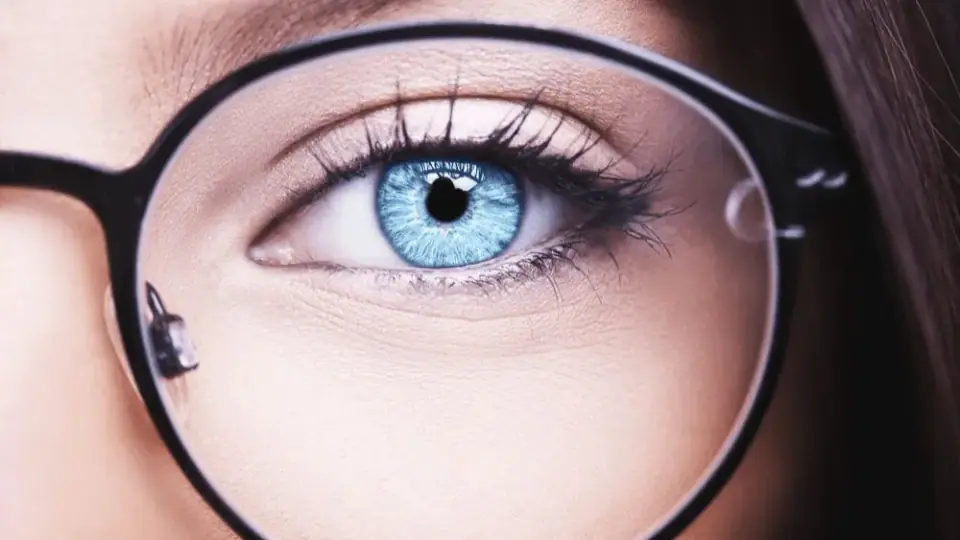
Anti-reflective coating
Untreated lenses reflect some of the light that hits them. An anti-reflective (AR) coating is a stack of very thin layers that cuts those reflections way down, so more light passes through the lens instead of bouncing off it.
- Better in photos and on camera: people see your eyes, not a white flash or a reflection of the window.
- A cleaner look: the lenses are less noticeable from across the room.
- Fewer distracting reflections at night: headlights and streetlights bounce around less on the lens surfaces.
- Less reflection from behind: on sunglasses, AR on the back of the lens cuts reflections of light coming from behind you.
Smudges tend to be more noticeable on AR lenses than on bare ones, which is why AR is often paired with an easy-clean top coat.
Scratch-resistant and easy-clean coatings
Scratch-resistant hardcoat
Most plastic lenses, including polycarbonate and high-index lenses, get a hard coating to help them resist scratches. Polycarbonate in particular is fairly soft on its own, so the hardcoat matters. It's resistant, not scratch-proof. Sand, grit and rough cloths can still leave marks, so good habits matter.
Hydrophobic and oleophobic top coats
These are slick outer layers that repel water (hydrophobic) and skin oils (oleophobic). Raindrops bead up and roll off, fingerprints wipe away more easily and the lenses stay clean a little longer. They're often built into AR coating packages.
Tints, mirrors and light-adaptive lenses
- Tints. Lenses can be tinted in a wide range of colors and darknesses, from a light fashion tint to full sunglass darkness.
- Mirror coatings. A reflective layer on the front of sunglass lenses that bounces some light away and adds a flash of color. Mirrors show scratches easily, so handle them with care.
- Light-adaptive (photochromic) lenses. These darken outdoors when exposed to UV light and fade back to clear indoors. Because car windshields block much of the UV, many photochromic lenses darken less in the car. They also tend to darken more in cold weather and take a little time to clear when you come inside.
These options can often be combined. A single pair of sunglass lenses might be tinted, mirrored on the front and anti-reflective on the back.
Your eye doctor and optician can tell you which lens options suit your prescription.
How to care for coated lenses
Coatings last longer with a little care. Most damage comes from wiping dry, dusty lenses, from heat and from harsh cleaners.
- Rinse first. Run lenses under lukewarm water to wash off dust and grit before you wipe.
- Wash gently. Use a drop of mild, lotion-free dish soap, then rinse and dry with a clean microfiber cloth.
- Skip paper towels, tissues and shirt tails, which can be rougher than they look.
- Avoid household glass cleaners, acetone and other harsh chemicals unless a cleaner is made for coated eyeglass lenses.
- Keep them cool and covered. High heat, like a hot dashboard, can crack or craze coatings, so store glasses in a case.
Choose your coatings with our opticians
At Aesthetic Eye Care in San Luis Obispo, our lens options include single vision and progressive lenses and anti-reflective coatings, and our sunglass lenses come in polarized, gradient and mirror-coated options. Our opticians can walk you through what each option does for your frames and your day.
If you're replacing older glasses, bring them along. Telling us what you liked and didn't like about your current lenses makes the choice easier. Call (805) 439-1010 or request an appointment online.
Is anti-reflective coating worth it?
For many people, yes. It makes lenses look clearer in person and in photos and cuts distracting reflections off the lens surface. If you choose AR, pair it with an easy-clean top coat so smudges wipe away easily.
Does a scratch-resistant coating prevent all scratches?
No. It helps lenses resist everyday scratches, but grit, sand and rough surfaces can still mark them. Rinse before wiping and keep your glasses in a case.
Do photochromic lenses work in the car?
Often only partly. Most photochromic lenses react to UV light, and car windshields block much of it, so they may not get very dark while you drive. Some versions are designed to darken more behind a windshield, so ask your optician.
Can coatings be added to my existing lenses?
Usually not. Most coatings are applied when the lenses are made, so adding or replacing one generally means new lenses. Your optician can tell you what's possible for your frames.
Keep reading
More from our eyewear guide
How to Clean Your Glasses and Care for Them
A simple cleaning routine for lenses and frames, what to avoid, and how to store and handle your glasses.
Read about cleaning and caring for glassesPolarized Sunglasses: How They Work and When to Choose Them
How polarized lenses cut reflected glare, where they help most and the trade-offs to know.
Read about polarized lensesPrescription Sunglasses Options: Pros and Cons of Each
Prescription sunglasses, clip-ons, light-adaptive lenses and more, with the pros and cons of each.
Read about prescription sunglasses optionsAccepting new patients
Make an appointment with our team
Reach out to Aesthetic Eye Care for your initial appointment and experience quality eye care in San Luis Obispo.